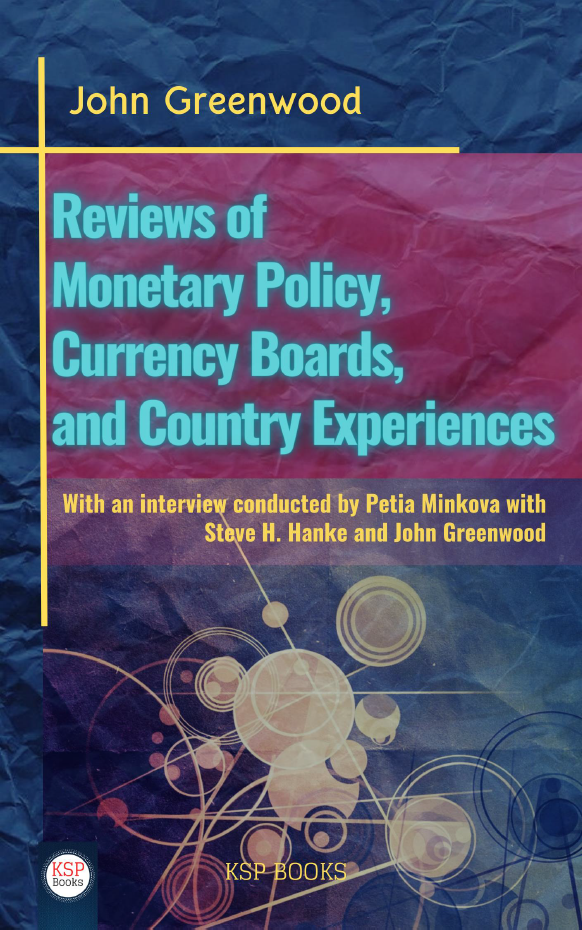
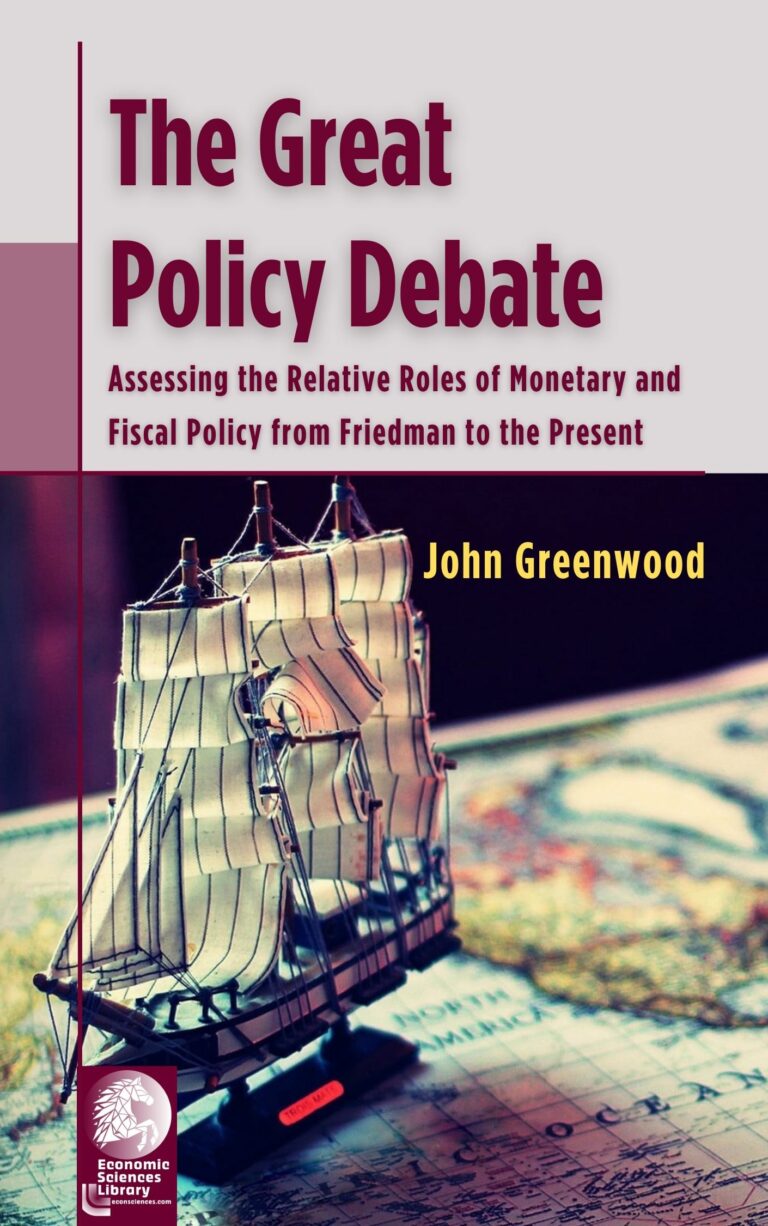
This book illuminates important contemporary economic debates from a deeply rooted monetarist perspective, emphasizing the unquestionably predominant role of monetary policy in determining macroeconomic outcomes. The presented studies question the fundamental tools and analytical frameworks of modern central banking while paying tribute to the enduring intellectual legacy of Milton Friedman, one of economics' most influential figures.
The COVID-19 pandemic, which began in March 2020 and the unprecedented economic responses that followed, has necessitated a reassessment of the reliability of traditional economic models and indicators. In particular, the ability of popular tools such as the Financial Conditions Index (FCI) to explain the complexity of the monetary policy transmission mechanism and its driving forces is being seriously questioned. The first article in this collection sharply compares the FCI model to Friedman's predictive monetarist model. The argument is that the post-March 2020 experience perfectly aligns with the monetarist framework, which demonstrates that movements in interest rates can be explained by a two-stage process: the liquidity effect and the Fisher effect, which follow changes in the money growth rate and act in opposite directions. This finding demonstrates that the FCI approach, which ignores money supply growth when assessing the stance of monetary policy and relies on a composite index based on interest rates and spreads, produces inconsistent and even contradictory results.
This objection triggers a deeper inquiry into the fundamental nature of monetary policy: Is monetary policy truly about interest rates?
The third article addresses this fundamental question, reconciling Keynes's liquidity preference hypothesis regarding the relationship between interest rates and the quantity of money with Irving Fisher's longer-term findings, including inflation expectations. It proposes that Keynes's liquidity effect is a short-term phenomenon, while Fisher's results are a determinant of long-term interest rates through the influence of inflation expectations. However, the ultimate conclusion of this article is unshakable: Interest rates are a highly misleading guide to assessing the stance of monetary policy; it is always better to rely on the broadly defined growth rate of money for this assessment. This poses a powerful intellectual challenge to central banks' use of interest rates as their primary focus.
This fundamental analytical framework is closely linked to Milton Friedman's evolving views on macroeconomic stabilization policies. The second article traces Friedman's transition from his early acceptance of Keynesian orthodoxy to the radically opposing view that fiscal policy plays almost no role in macroeconomic stabilization. Friedman substantiates his challenge by comparing historical periods in which monetary and fiscal policies moved in the same or opposite directions: monetary policy inevitably dominates fiscal policy in determining macroeconomic outcomes, especially when the two policies conflict. This finding strongly suggests that, in today's environment of increasing popularity of fiscal theories, policymakers should once again turn their attention to money supply dynamics.
This focus extends to inflation theories, another important current economic debate explored in the fifth article. The article examines why the two common theories used to explain inflation, the fiscal theory of the price level and the Phillips curve (or output gap) models, fail. Both models are shown to be reduced-form analyses that make no reference to the underlying monetary causes of inflation. Consistent with the monetarist view, it affirms that inflation is ultimately a monetary phenomenon and concludes that a sharp rise in inflation cannot occur without a sustained period of faster money and credit growth.
Finally, the fourth article, "An Ode to Milton Friedman," reminds us that he was not only a brilliant theorist but also an economist with a deep interest in applying his theoretical analysis to practical applications. His anticipation of the collapse of the Bretton Woods fixed exchange rate system, his advocacy of the introduction of foreign exchange futures contracts, and his advocacy of fixed exchange rate systems or currency boards for small open economies were reinforced by his direct involvement in the stabilization of the Hong Kong dollar after its collapse in 1983. These examples illustrate how Friedman's academic knowledge strengthened his confidence in policy implementation.
Taken together, all the articles in this volume revitalize the monetarist thesis that money growth is a central indicator of macroeconomic stability and policy stance. This has important implications for policymakers and analysts, especially at a time when global central banks are pursuing unprecedented monetary policies and the threat of inflation is reemerging. These studies direct our attention away from misleading signals like interest rates and complex indices and toward money growth and its inescapable impact on economic outcomes.
Preface
1. Beware financial conditions indicators!
Introduction
The Monetarist transmission mechanism
Application of the Monetarist framework to the United States
Transmission of monetary policy based on the FCI framework
Application of monetary and FCI frameworks to the US
Application of monetary and FCI frameworks to the euro area
Application of monetary theory and FCI framework to the UK
Conclusion
2. Milton Friedman’s views on the interaction of monetary and fiscal policy
Introduction
Friedman’s early views on fiscal policy, 1941-48
Friedman’s settled view on fiscal policy, and its interaction with monetary policy
Case studies of the interaction of fiscal and monetary policy
Illustrations from the USA in the 1960s
Classic cases from around the World
Cases from British financial history
Cases from Japanese financial history
Conclusion
3. Monetary Policy is not about Interest Rates; the Liquidity Effect and the Fisher Effect
Keynes’ Liquidity Preference Theory
Fisher’s Theory of Interest
Case Studies
Conclusion
4. Remembering Milton Friedman:A Eulogy
5. Why Fiscal and Phillips Curve Theories of Inflation are not Working
Inflation are not Working
Inflation since the Global Financial Crisis
Two Popular Explanations for Inflation
Popular Explanations for the End of the Business Cycle Expansion
Conclusion
Conclusion
References


 This Book is completely open access. You can freely read, download and share with everyone.