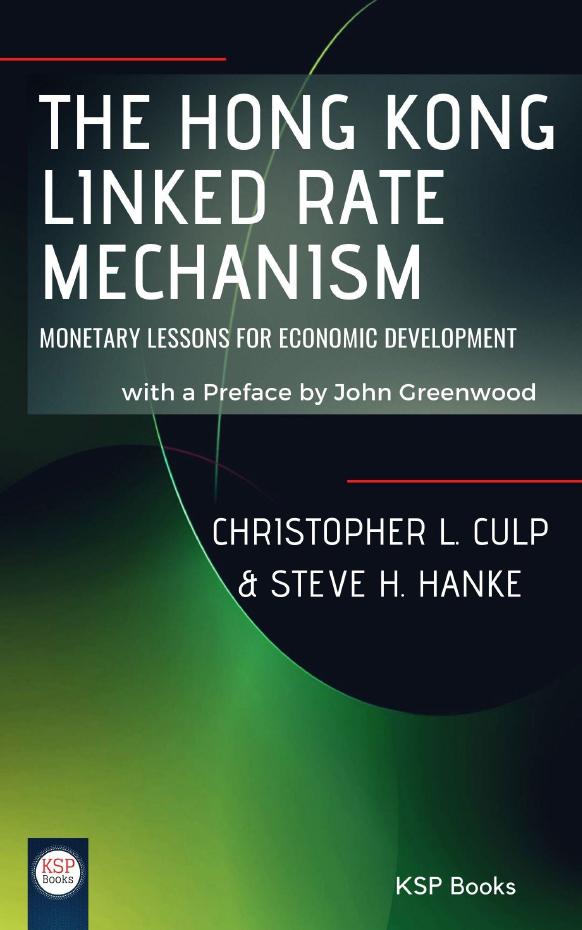
Preface
Prof. Hanke’s Bio
1. Early Life
2. The University of Colorado
3. Early Years at Johns Hopkins University
4. Away from Hopkins: Nairobi, Berkeley, and Austria
5. Working in Washington
6. Currency Reform
7. The Austrian and Other Schools of Economics
8. Involvement in Trading and the Business World
9. Public Figure
10. Teaching, Writing, Friendships
11. Final Thoughts
References
Dr. Kurt Schuler
Center for Financial Stability in New York, USA.
Dr. Kurt Schuler - Center for Financial Stability in New York, USA Kurt Schuler is an economist in the Office of International Affairs at the U.S. Department of the Treasury. In his spare time he pursues an interest in economic history; the Historical Financial Statistics data set elsewhere on this site is one result. Schuler’s affiliation with the Center for Financial Stability centers on the development of the free of charge Historical Financial Statistics and implies no endorsement by the Department of the Treasury. Before joining the Treasury, Schuler worked as a consultant, then as an economist at the U.S. Congress. As a consultant he undertook projects for aid agencies, central banks, investment firms, and think tanks around the world. He also wrote studies about currency boards with Steve H. Hanke of Johns Hopkins University, which influenced monetary reforms in the 1990s in Bosnia, Bulgaria, Estonia, and Lithuania. At the U.S. Congress he was a senior economist at the Joint Economic Committee. There he wrote staff reports on taxation, spending, and monetary policy, and occasionally assisted with drafting legislation. His research on dollarization had some influence on Ecuador’s dollarization in 2000. Schuler has a Ph.D. in economics from George Mason University. He has been a postdoctoral fellow at Johns Hopkins University in Baltimore. He has written more than 100 publications, including books, essays, and newspaper articles. Because of his job, he refrains from commenting on matters of current economic policy and focuses his work for public consumption on matters of economic history.
"
Integration or Divergence? Bulgarian Agriculture in a Global Context is a comprehensive study that fills a significant gap in the literature on global agricultural economics by positioning Bulgaria within the global context. While Bulgarian agriculture has often been analyzed through the lens of transition and EU integration, this book offers a systematic comparative analysis across all world regions. The dissertation addresses one of the most topical and simultaneously debated yet underexplored issues in agrarian theory and practice—global regional agricultural development in historical, current, and prospective dimensions. In Bulgaria, comprehensive assessments and classifications of Bulgarian agriculture within the framework of global regional development over the past 50 years are practically absent. Internationally, there are few such extensive studies applying diverse approaches and indicators across different periods, regions, and countries."
By Prof. Dr. Hrabrin Bachev
Click here to read the full book review.



 This Book is completely open access. You can freely read, download and share with everyone.